
Pick the cheapest plan that covers your site’s resource, support, email and backup needs, and compare the full cost over the same period instead of the advertised monthly price. If a renewal or a required add-on changes the ranking, switch plans before you pay.
Why Does a Cheap Hosting Plan Cost More at Renewal?
A plan advertised at a few dollars a month can ask for a year or more upfront. The monthly price is the introductory total divided by the prepaid months. At $3 a month on a 36-month term, you pay $108 at checkout.
The next term is a separate commitment. After a discounted first term, the plan renews at the provider’s regular rate, and that rate can differ for one-month, one-year and two-year renewals. An introductory discount pays off when the site stays online long enough to use the full term.
In a notice effective for renewal invoices issued from May 19, 2026, Namecheap listed Stellar shared hosting at $5.88 for one month, $55.88 for one year, and $102.88 for two years.
SiteGround’s published standard StartUp rates also vary with commitment length: $24.99 per month for a one-month term, $17.99 per month with 12 months prepaid, and $14.99 per month with 24 months prepaid. Those rates exclude taxes and apply to the stated terms, so your own offer is the billing document that counts.
A renewal jump can make you reconsider a host even when your site hasn’t changed. One Hostinger customer listed three charges for a single website and decided to leave:
I’ve been with Hostinger since 2023. I initially paid 44.53 for a full year of Business Web Hosting. I only have one website. Since then, my renewal cost has been 143.88 (11.99 per month). My renewal date is approaching, and I’ve noticed the new rate is 203.88 (16.99 per month) for the exact same services and website I’ve had since 2023, … I won’t be renewing my plan and will let it expire and migrate my website to another platform.
What Does the Cheap Hosting Price Include and What Costs Extra?

Hosting often leaves other necessary services on separate bills. A domain, business email, site backups and help restoring a broken website can come from the same company, from outside providers, or from a mix of subscriptions.
A free first-year domain promotion can lead to a paid renewal. Basic SSL/TLS certificates may already be included, so judge a premium certificate against a specific need. Backup creation, retention and restoration are three distinct service terms, and a plan with automatic backups can still limit how far back a restore goes.
| Service | Check in the offer | Cost consequence |
|---|---|---|
| Domain | First-year price, renewal, registrar control | Separate recurring registration charge |
| Mailbox count, storage, outside-provider compatibility | Required mailboxes can need another subscription | |
| SSL/TLS | Included certificate and renewal terms | Optional upgrades add cost |
| Backups and restore | Frequency, retention, access, restoration terms | Restoring data can require paid help |
| Migration and support | Transfer help, channels, hours, covered work | One-time help or service upgrades |
| Website allowance | Site count and resource allocation | Extra capacity can require a higher tier |
| Refund terms | Time limits and excluded products or services | Some payments stay nonrefundable |

Charge a plan only for the missing services you need. If your current domain and mailbox contract stays as it is, those costs sit on both sides of the comparison and cancel out when you compare only the added cost of switching.

If you rely on updates, specialized support or staging, managed WordPress hosting can justify a higher price. If you’re comfortable maintaining one simple site, you’ll place less value on it.
One hosting.com customer reported paying $148 for a promotional managed WordPress year and facing a $428 renewal. They weighed a $299 alternative that reportedly supported up to five sites, and said the current service had caused no significant complaints. Those are the customer’s reported figures. Whether the replacement is worth it depends on the management services and capacity it includes.
If you run one site, unused website slots add little. If you plan more installations, the extra slots help, as long as the shared account resources can handle the workload.
Which Limits Can Make the Cheapest Host a Bad Fit?
Entry-level plans cap storage and computing resources. CPU, memory, disk input/output, file counts and concurrent PHP requests decide how a WordPress site performs when visitors arrive or background tasks run.
Hostinger’s resource-limit documentation, for example, describes CPU and I/O ceilings that can slow operations, plus RAM and process limits that can contribute to 503 Service Unavailable errors. Thresholds vary by provider and plan, and a 503 can also come from application or server faults that need a different diagnosis. Free plans add their own constraints, covered in the limits and risks of free web hosting.
| Resource | Consequence if constrained | Relevant evidence from your site |
|---|---|---|
| CPU | Slower processing of dynamic requests | Resource peaks under expected traffic |
| RAM and processes | Requests can fail when process or memory limits are reached | Memory consumption and error records |
| I/O | Slower file and database activity | Observed I/O use during busy periods |
| Inodes | New files can’t be created at the file-count ceiling | Current file count and quota |
| PHP workers | Dynamic requests can queue or exceed concurrency | Concurrent traffic and worker allowance |
| Storage and transfer | Capacity or transfer-policy restrictions | Stored data and expected usage |
A WordPress site piles up separate files through generated image sizes, plugins, caches and uploads. Hostinger’s inode guidance says that reaching the applicable limit can stop further file creation while storage space remains available.
An unmetered transfer allowance can still coexist with limits on processor time or concurrent work. Read “unmetered” within the scope of the published transfer policy.
For an established site, compare its current file count, storage use, resource peaks and error logs with the candidate plan’s documented quotas. For a new site, estimate a plausible traffic and plugin workload and check that the host discloses enough to evaluate it. A plan that hides a critical limit fails the suitability test.
How to Compare Hosting Costs Over the Same Three or Four Years
Compare every suitable offer over the same period and keep the actual payment schedule. A 48-month view captures both an introductory term and the later renewal, while 36 months better matches a shorter project. Show the invoice due today next to the total, because an attractive average can hide a large upfront payment.
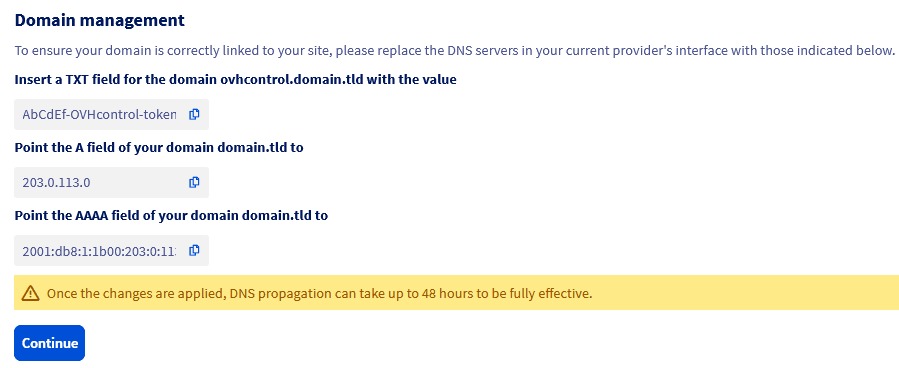
Include hosting payments, required domain and email services, necessary backup or support charges, setup or migration expenses and taxes. Divide the full cost by the months in the period only after applying the same essential services and period to each option. The hosting, domain, and DNS ownership guide explains what changes if you move domain registration, DNS hosting or website accounts.
A 48-month worked example
These invented plans illustrate the calculation. Plan A requires 36 months upfront at a $2.50 monthly equivalent, then 12 months at $12 per month. Plan B starts with 12 months at $5 per month, followed by 36 months at $8 per month. Both are assumed suitable for the same website, and the totals exclude taxes, domain renewals and migration costs.

| Illustrative offer | Paid today | Later hosting charges (total through month 48) | Required email over 48 months | 48-month total | Effective monthly cost |
|---|---|---|---|---|---|
| Plan A, hosting only | $90 | $144 | $0 | $234 | $4.88 |
| Plan A plus separate email | $90 | $144 | $192 | $426 | $8.88 |
| Plan B, email included | $60 | $288 | $0 | $348 | $7.25 |
On hosting alone, Plan A saves $114 over the four years. If your site needs separate email at an assumed $4 per month and Plan B includes an equivalent mailbox service, Plan B saves $78. A required service changed which suitable offer is cheapest, while the bills due today stay at $90 and $60.
When a prepaid renewal extends past your comparison period
Say 12 months remain in your comparison, but keeping the service means buying a 24-month renewal. You owe the full invoice even though only part of the prepaid service falls inside your period. Record both the cash committed and the cost of the months you use, and note the unused months past the boundary. Check the contract to see whether those months are refundable.
Unknown future renewal prices need an explicit assumption. Use a published standard rate with its source, plan and billing term, then test a later price change as a scenario.
A reusable offer worksheet
Use the same fields for each real candidate:
- Identity and term: Provider, plan, currency, price source, first-term months and renewal interval.
- Payments: Tax-inclusive cash due now, later scheduled invoices, renewal assumptions and prepaid months beyond the comparison period.
- Required extras: Domain, equivalent email service, restoration, technical assistance and any one-time setup or migration expense.
- Decision outputs: Full cash commitment, cost of the months you use, effective monthly equivalent and any pricing unknowns.
Fill in the fields from your real offers, then change one uncertain renewal assumption at a time. If a plan’s advantage vanishes after a modest change, choose a shorter commitment or read the contract terms more closely.
How to Check Performance and Support Before a Long Prepayment
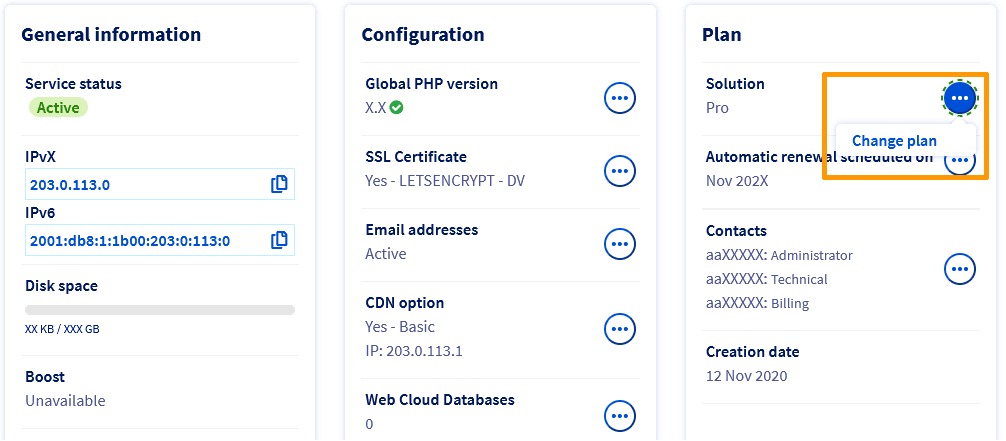
A long prepaid term makes unsuitable performance or weak support expensive to discover after purchase. Look for evidence tied to the plan and your workload: how requests behave under realistic demand, what support covers, and which payments you lose if you leave.
A prospective site owner described the concern this way:
Launching a small project soon and trying to keep costs down, but I also don’t want to migrate in 6 months because the performance is awful. And every review site looks like an affiliate farm, so I’d rather hear real experiences from actual users.

A service-level agreement sets contractual commitments and remedies. A measured uptime result describes one observation window. When you read a benchmark, check the tested plan, application workload, server location and measurement period. A test from a different tier gives context but answers a different performance question.
A host may advertise chat yet reserve application troubleshooting, backup restoration or migration help for another plan. Before committing, ask one concrete question, such as whether staff will help restore a WordPress site after a failed plugin update, and record the channel, the response and any exclusion.
Then read the refund terms for your contract length. Domain fees, setup charges and other separately purchased services can be excluded even when the hosting plan advertises a money-back period. For a business site, recovery assistance can justify a price difference that is small next to the cost of an unresolved outage.
When Is Switching Hosts Cheaper Than Staying?

Switching pays off when future savings on a comparable service exceed the one-time cost and disruption risk of the move. The original introductory payment is already spent. The decision concerns the approaching renewal and the replacement offer.
One small-business owner described a WordPress move with four email accounts and said they would pay once for help:
We’re an established small business and have been using GoDaddy for years (constantly “begging” for lower pricing). Renewal notice just came and it’s ridiculous! I’m ready to move hosting for our WordPress site and 4 emails. I’m techie enough (I handle the basics of maintaining the site on the backend) but would gladly pay someone for their service of assisting with moving everything. We don’t need someone as a “middle-man” for ongoing upkeep, but rather a one time move. You’d guide us to which hosting/service to use and then through the process. I’m assuming this is at least fairly common? I don’t want to post URL or any other business name/info here, but would appreciate any advice in replies or feel free to reach out. Thank you!
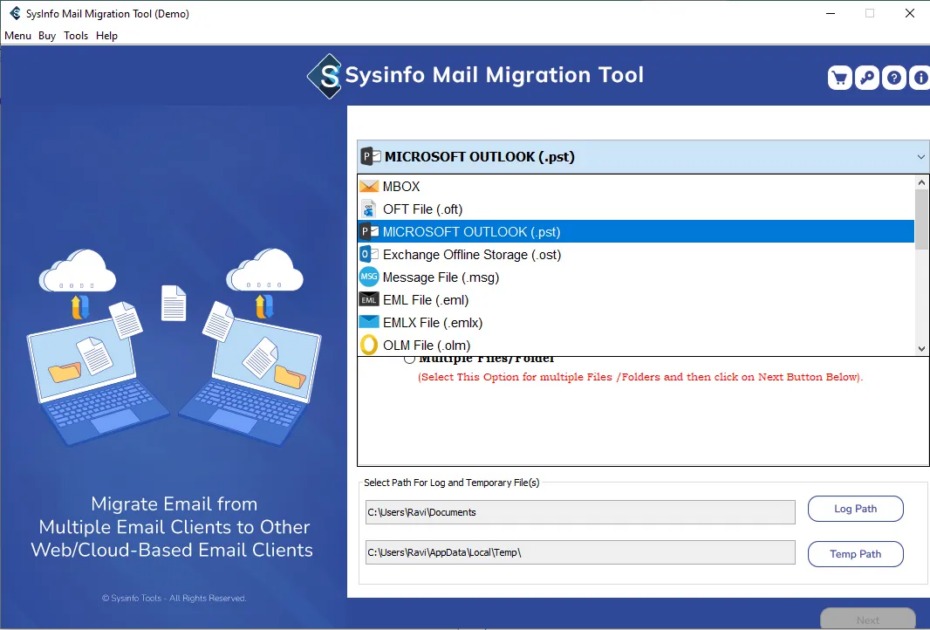
WordPress hosting involves site files, a database and an application environment. Email continuity depends on the mailbox provider and DNS routing, and the domain’s registrar can stay the same when the website moves. If you also change domain registration, renewal fees or registrars, the true cost of bundled domain and hosting offers covers those costs.

Under the ICANN transfer policy, some inter-registrar transfers are restricted for 60 days after registration, a previous transfer or particular registrant changes, with exceptions.
Find the financial break-even point
Let S be the annual recurring savings from a comparable replacement, after essential ongoing costs, and M the one-time migration and setup expense. For positive S, the approximate break-even time in months is 12 × M ÷ S. Mail or website downtime is a separate business risk.
Include the imminent renewal, the alternative’s annual charges, one-time help, and any domain or email services that continue separately. If you need uninterrupted sales or customer mail, paying more to cut the risk of a failed move can make sense.
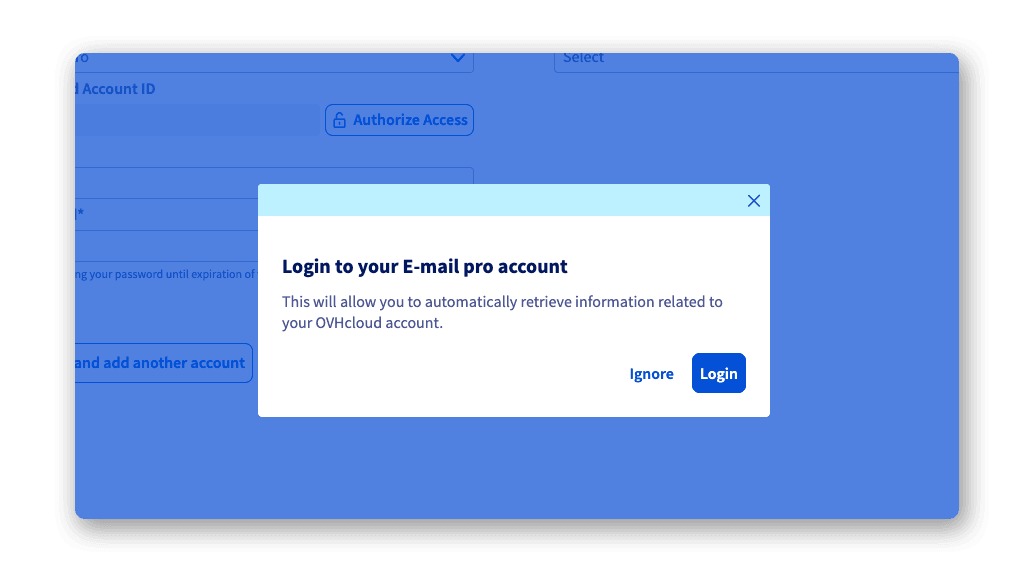
Before cancelling the old service, secure a usable backup, test the new WordPress installation, identify the DNS and mail records that need attention, and arrange a fallback in case the move fails.
Which Budget Hosting Setup Fits Your Website?
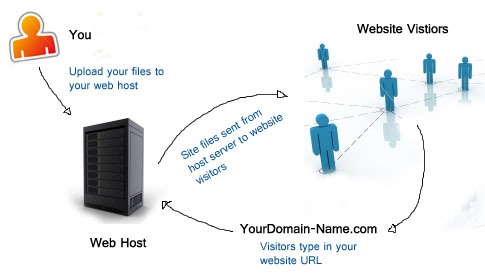
Start with your website type, then check actual traffic, file counts, technical responsibility and recovery needs to confirm the cheapest qualifying plan fits.
| Reader situation | Put first | Reject when |
|---|---|---|
| Small personal project | Manageable upfront cash, included SSL and usable backups | The required prepaid term outlasts the likely project |
| Established WordPress business | Predictable renewals, recovery help and continuity of mail | Essential support or restore capability is missing |
| Freelancer with several client sites | Separate backups, site allowance and adequate aggregate resources | Website slots exceed practical CPU, inode or process capacity |
What to Check Before Paying or Letting Hosting Renew

Match the final tax-inclusive charge to the exact plan and billed term, check automatic renewal and cancellation terms, and save the payment confirmation. Hostinger documents renewal-price information under Billing → Subscriptions, and the FTC’s consumer guidance explains recurring-charge precautions.