
Take the free domain if the hosting plan already suits your site and its cost over 24 to 36 months, domain renewals included, beats registering separately. Check the account-control terms too. For a site you’ll run for years, register the domain on its own if renewals cost more or you’d rather not depend on one provider.
What Does a Free Domain With Hosting Include?
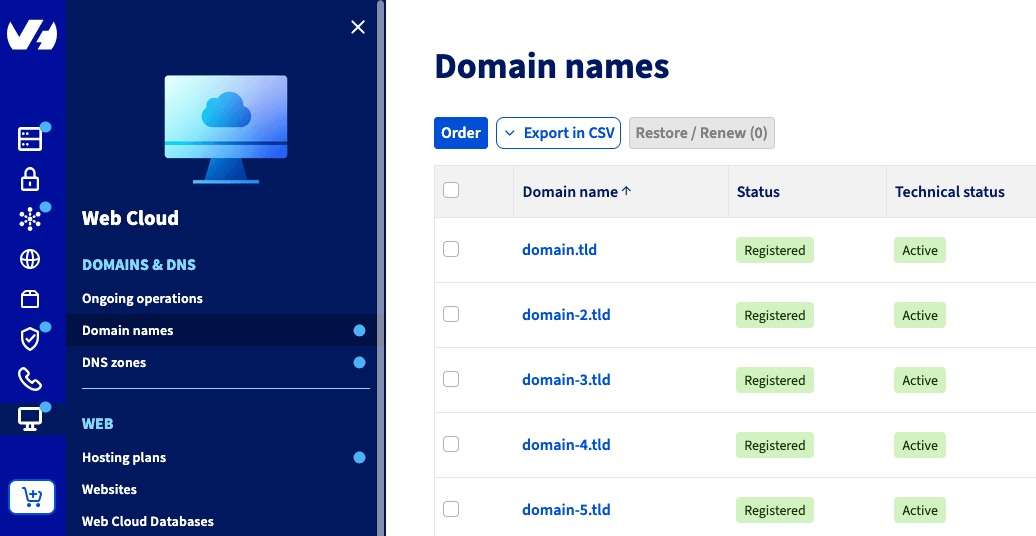
A free domain with web hosting usually means an eligible first-year registration or transfer credit attached to a paid hosting purchase. Hosting, domain registration, DNS and email stay separate functions even when one company sells them together. The included year ends, and the domain then needs renewal. A free subdomain or a completely free hosting account is a different kind of offer. Planning to run email on this domain? MX records, DKIM signatures and mailbox ownership matter here, and business email hosting and DNS authentication requirements covers them.
Which Hosting Plans Qualify for a Free Domain?

Each free-domain offer applies to a particular hosting plan and has its own rules: the product, the initial billing commitment, the domain extension, whether it’s a registration or a transfer, and the deadline for claiming it.
The lowest advertised monthly price often requires a longer prepaid contract. A one-month purchase can come with different domain benefits than a qualifying annual or multiyear order.
| Provider | Qualifying commitment | Included domain benefit | Conditions that matter |
|---|---|---|---|
| Hostinger | At least 12 months on qualifying new plans | One eligible domain year; registration claimed within 12 months | Plan and TLD exclusions apply. Eligible new registrations and free transfers follow different program rules. |
| Bluehost | Eligible 12- or 36-month hosting purchase | First-year domain voucher valued at $18.99, redeemable within 90 days | Eligible extensions are limited. A domain priced above the voucher value requires payment of the difference; premium names are excluded. |
| DreamHost | Qualifying annual hosting plan for an eligible new account | First-year domain registration credit | Two official help pages disagree about the redemption deadline: one month or three months. |
| HostGator | Qualifying new 12-, 24-, or 36-month hosting package | One year of eligible domain registration | Offer-specific and general pricing pages describe eligible product categories differently. |
Hostinger’s free-domain registration guidance lists qualifying web, cloud, KVM, and certain email products, with restrictions that vary by plan and domain extension. The registration benefit excludes ordinary renewals of an existing domain.
Hostinger runs a separate free-transfer program for selected web and cloud hosting purchases of at least 12 months and specified extensions. KVM and Business Email plans are excluded from it, so a plan that includes new-domain registration needs its transfer eligibility checked separately. Hostinger also documents a 15-day domain-verification requirement after registration. That is an account rule, separate from the rules for inter-registrar transfers.
Bluehost’s domain voucher documentation states the $18.99 credit, qualifying purchase terms, and 90-day redemption period. The voucher can reduce an eligible name’s initial cost to zero.

DreamHost’s deadline is less clear. Its free-domain program page gives three months to claim the credit, while a separate domain-registration FAQ says one month. The terms attached to your purchase decide which one applies.
One prospective buyer raised several of these concerns on Reddit:
I’m comparing different web hosting providers and noticed that many advertise a “free domain,” but it often seems limited to higher-tier plans or comes with conditions. Are there any hosting companies that genuinely include a free domain name with their base/entry-level plan? Also, are there any hidden catches I should be aware of (like renewal pricing or forced long-term contracts)? Would appreciate real experiences and recommendations. Thanks!
What Does a Free Domain Cost Over Three Years?
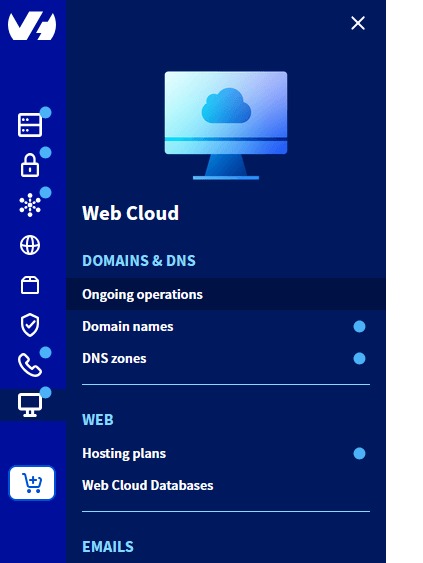
Compare the total you’ll pay over the period you expect to keep the site, using the same 24-month or 36-month window for both options. An included first-year domain saves the initial registration charge when the benefit applies. Later domain renewals and hosting invoices decide what that saving is worth.
Start with the payment due today. An advertised monthly price can stand for a much larger invoice collected upfront for the whole term. If 36 months of hosting is billed upfront, count that invoice once and don’t multiply it by another 36 monthly charges.
Build a comparable cost worksheet
Hosting capability matters too: a cheaper plan with materially different storage, support, or resources is not an equivalent purchase.
| Cost component | Domain bundled with hosting | Domain registered separately |
|---|---|---|
| Initial hosting payment | Invoice for the first hosting term | Invoice for the first term of comparable hosting |
| Initial domain registration | $0 when the selected domain qualifies fully for the benefit; otherwise the remaining charge | Registrar’s initial registration charge |
| Domain renewals | Renewal invoices due within the period | Independent registrar renewals due within the period |
| Later hosting renewals | Hosting invoices due after the first term and within the period | Invoices for comparable hosting due after its first term and within the period |
| Required services | Mandatory fees plus extras you choose | Equivalent mandatory fees and chosen extras |
| Taxes and other charges | Charges on the bundled purchase | Charges on the alternative |
Add up each column, then subtract the bundled total from the separate total. A positive difference favors the bundle on cost; a negative difference favors registering separately.
A worked domain-renewal example
A public Bluehost domain-price listing showed a historical .com renewal of $23.99. Say that rate applied to two annual renewals with no price change. The arithmetic is 2 × $23.99 = $47.98 in domain-renewal charges over a 36-month period that follows an eligible $0 first-year registration.
With hosting and every other charge held equal, separate registration would be cheaper on domain costs if its initial registration plus two renewals came to less than $47.98. Hosting, optional services, taxes and the independent registrar each need their actual prices before you can compare complete totals.

For a domain registered at month zero and renewed annually, charges fall near months 12 and 24. A renewal due at month 36 comes after a comparison window that ends just before it, so list it separately as the next expense.
A first website that will run for about a year can justify a shorter comparison window. If you plan to keep the domain for years, later renewals matter more.
Separate optional services from registration cost
Domain privacy, hosted email, backups and other extras count only when they’re required or you choose them, and their price depends on the package. The same Bluehost listing showed a $15 privacy add-on, one example of a possible separate expense.
Should You Bundle Your Domain or Register It Separately?
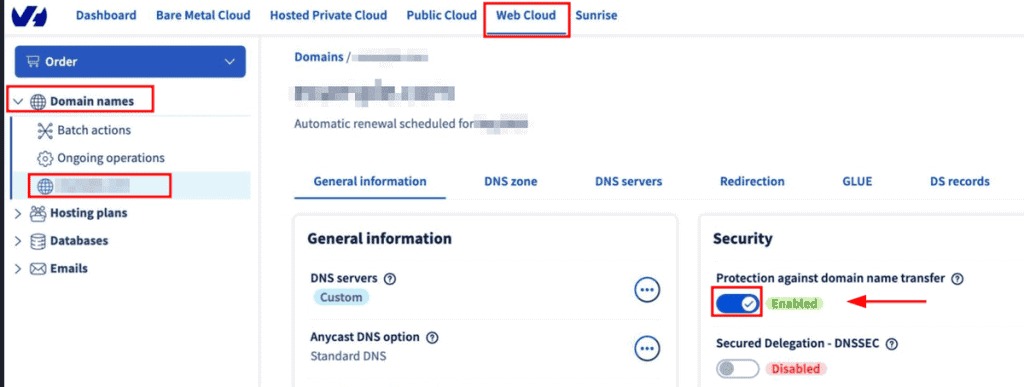
Bundling gives a new website owner one provider for checkout, domain setup and hosting configuration. Registering separately keeps your domain with its own company, so it stays in place when your web hosting changes.
| Reader situation | Bundled registration | Separate registration |
|---|---|---|
| First portfolio or personal blog | One provider handles the initial setup | You need a separate registrar account and configuration |
| Long-lived small-business website | Works if renewal and domain-access terms stay acceptable | Registration stays independent of the web host |
| Site likely to change hosts | You need continued access to the registrar account and DNS | Less reliance on the current host for domain administration |
| Simple administration is the priority | Fewer services to manage at first | Responsibilities are split, with more accounts to manage |
A beginner setting up a personal blog may value having one company’s support team help with the initial domain and DNS configuration.
A business that expects to replace its host can keep the registration under a separate account, so changing hosts doesn’t depend on the hosting provider.
Web hosting, email, backups, DNS management and registrar support can be sold under different terms. The hosting, domain, and DNS ownership guide explains how registration, DNS hosting and website accounts divide up if that affects your choice.
Can You Change Web Hosts and Keep Your Domain?
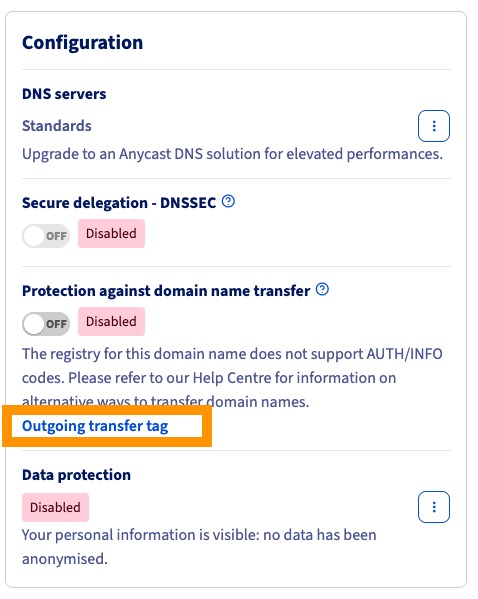
A domain can stay with one registrar while the site runs on another company’s servers. Whether you can keep using the address depends on who controls the registration and the DNS records that direct visitors and email. For the MX record, authoritative nameserver and SPF checks, follow the web-hosting migration plan that protects email.
Your domain relies on three separate functions:
- Domain registrar: Holds the registration, including registrant information and expiration arrangements.
- Authoritative DNS provider: Publishes the records that direct website traffic and identify mail services.
- Website and email hosting: Delivers the website and receives and processes the domain’s mail.
A registrar transfer changes who maintains the registration. Updating DNS changes where the domain sends traffic. Moving files and databases changes where the site runs.
The separation matters most when the previous host can’t be reached. One Reddit contributor described this about a website and email address they had used for years:
My bad for trusting a startup/small business. Website down, no communication from host, assume they are closed down and didn’t announce it. Is there any way to salvage the website and move it to another host without an authorization code/EEP code/transfer key? I have had my site for a long time, and I basically just use it for email but I’m REALLY attached to it. Any way of getting my site up and running on a new host?
An EPP or authorization code belongs to the registrar-transfer workflow. Recovering the website and email depends on the data, service arrangements and account access you have.
ICANN’s inter-registrar transfer information explains the general 60-day restrictions that can follow a new registration or an earlier registrar transfer. A separate restriction can apply after certain changes of registrant.
These restrictions cover registrar transfers only. Changing DNS records or moving website hosting is a different process and doesn’t require changing registrars, though it depends on the services and account access involved. Cloudflare Registrar adds one operational limit: it requires Cloudflare nameservers for domains registered through it.
For a domain you plan to keep, find out which registrar holds it and whether you can sign in to that account. Check who controls the registrant contact details, DNS settings and expiration notices, and how you would get an authorization code when a transfer is eligible.
ICANN’s RDAP lookup can show registration information, though public registrant details may be redacted. It can’t tell you whether someone can sign in to the registrar account.
What Happens to the Domain When You Cancel Hosting?
Canceling web hosting can change your hosting refund while the domain registration stays in place. Refund policy, domain expiration and renewal each follow their own conditions.
Hostinger deducts the cost of a domain received through an eligible hosting benefit from a qualifying hosting refund, and the domain stays usable for its registered term. DreamHost’s program also describes cases where closing the account early leaves you responsible for the domain registration cost.
HostGator’s free-domain offer terms list a $17.99 domain deduction, or $18.99 for a .com, plus applicable taxes. Its general pricing information gives a less specific amount, so the terms for your particular order control the calculation.
Three things decide what you lose: the refund left after any registration deduction, the domain’s expiration date, and any auto-renewal commitment still in effect. Find the domain-specific refund clause before you cancel, and note those amounts and dates.
What to Save Before Completing Checkout
Once you’ve checked eligibility, compared costs and decided how to manage the domain, save the details of the actual purchase. The order confirmation and applicable agreement record which offer applied to your transaction.
Keep these seven items:
- Intended domain: Exact spelling, extension and number of domains. Remove any unintended extra name from the cart.
- Hosting product: Full plan name and the length of the initial paid commitment.
- Included benefit: Confirmation that your registration or transfer gets the promised domain credit.
- Initial payment: Itemized hosting, domain, optional-service, tax and other charges, plus the total due at checkout.
- Next billing events: Renewal amounts and dates for hosting, registration and any separately billed services.
- Account access: Registrar account details, registration contact and the address for renewal notices.
- Applicable terms: Promotional conditions, cancellation and refund provisions, the order confirmation and checkout records.
The record separates a later domain invoice from the original hosting purchase. It also shows which version of a provider’s promotion applied to your order when public offer pages differ.
For the renewal, backup-fee and support-limit checks, see how to calculate the full cost of budget hosting.