
Judge a hosting or cloud recommendation by the evidence behind each claim. A documented test supports a measured result, dated primary documentation supports a stated feature, and a transparent calculation supports an estimate. If the record is missing or the plan, region, workload, or date differs from yours, treat the recommendation as provisional: check its source or request a correction.
A hosting comparison might describe a resource limit, report WordPress performance, and estimate a year’s cost. All three statements can be accurate, yet each needs a different kind of proof. Ask what was observed, where the information came from, and whether its conditions match your decision.
What Evidence Labels Mean
One review mixes tested results, documented specifications, modeled expenses, and individual opinions. Each statement carries the confidence its own evidence earns.
| Evidence label | Basis | What it establishes | What to look for |
|---|---|---|---|
| Tested | Original measurement and recorded setup | What was observed on that setup | Test configuration, period, metric, and results |
| Document-verified | Original provider or authoritative documentation | A feature, limit, or requirement as stated at a given time | Exact document, tier or version, and checking date |
| Calculated | Arithmetic or a model with explicit inputs | An estimate that holds only for those inputs | Usage, units, billing region, rates, and exclusions |
| Community-reported | One attributable experience or opinion | What that contributor reported | Original contribution and circumstances |
| Unverified | Insufficient traceable support | A claim nobody has backed up yet | The missing observation or document |
Labels attach to individual claims, even when several appear in one article. A provider’s published storage allowance supports a description of its advertised plan. A claim about storage throughput needs a measurement of throughput.
A community account can flag an unusual support failure or an unexpected VPS limitation, but one report cannot establish a market-wide failure rate. A model of monthly cloud charges is reproducible when its billing assumptions and usage inputs are visible.
Classify the claim you’re relying on before you treat it as evidence for a purchase or infrastructure change.
Source Selection and Checking
Source checking starts with one claim and the material that can support it. Provider terms establish what a plan promises. An original test record establishes measured behavior. Institutional guidance establishes what the issuing body advises or requires within its scope.
A source trail names the original URL, the product and tier, the region or software version where it matters, and the date the statement was verified. Plans, limits, and prices change, so these details carry weight.
Say a hosting comparison states that a plan includes daily backups. The evidence trail pairs that statement with the plan’s published backup terms, names the tier, and records the check date, which makes the statement document-verified. Proof that a backup restores successfully needs a separate, documented restore test.
The same applies to a cloud feature available only in certain regions. The source record must keep the region restriction, or a general description quietly widens the claim. An older screenshot may show an earlier plan or software version, even if its wording was accurate when created.
To check a source yourself, open the original document and compare its exact language with the article’s claim, plan, version, and checking date. A search excerpt only points to the document, which shows the scope.
Test Setup and Interpretation
A performance number means little until you can see the setup behind it.
| Test-record field | What you should be able to see | What it helps you decide |
|---|---|---|
| Product and plan | Provider, service tier, allocated resources | Whether the tested setup resembles your purchase |
| Environment | Server region, runtime, versions | Whether location and platform differences matter |
| Application | Site or software stack, database, cache configuration | Whether the workloads are comparable |
| Load | Requests, concurrency, content, test pattern | What the workload exercised |
| Instrument | Tool and version | How the measurement was obtained |
| Result | Metric, unit, repeated observations | What was actually measured |
| Observation window | Start and end, frequency, interruptions | Which period the finding covers |
| Supporting artifact | Original results or retained measurement record | Whether the reported figure is traceable |
Comparing an uncached, database-heavy WordPress page with a cached static page mixes application workload with hosting capability. A fair comparison uses the same sample site and configuration, then records the remaining differences.
Field observations and laboratory tests
Laboratory tests repeat a defined test under controlled conditions. Field data comes from real visitors on different devices, networks, and locations.
Google’s PageSpeed Insights documentation explains the Chrome UX Report (CrUX) field data and Lighthouse laboratory diagnostics. Reading both tells you whether a finding reflects real users or a synthetic test.
Page speed also depends on code, images, database behavior, caching, and visitor geography, so a hosting conclusion needs that application context. Support evaluation splits the same way: a quick sales answer, a technical explanation, and a resolved fault are three different observations.
Other infrastructure claims need their own test methods
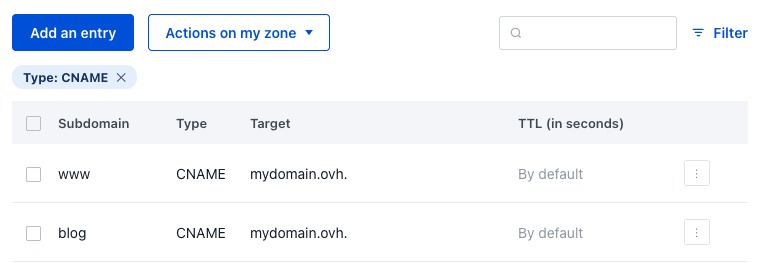
A DNS troubleshooting result should name the record type, authoritative zone, resolver, expected answer, and the response observed before and after a change. After changing a record, compare the authoritative nameserver’s answer with the answer from the resolver you’re investigating. If the authoritative answer shows the change while the recursive resolver still returns the earlier answer, the difference lies in the resolver’s cache.
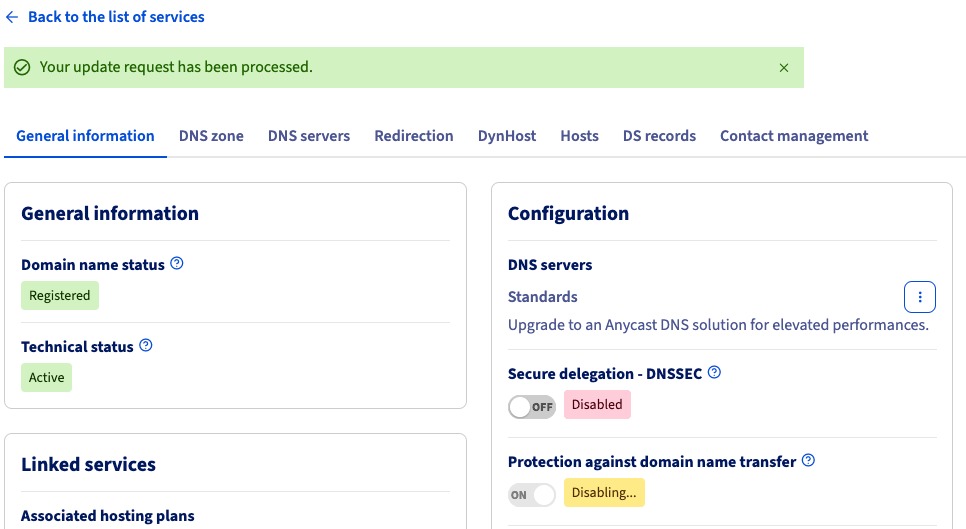
For an operations procedure, document the prerequisites and what happened at each verification step. A control-panel screenshot that looks successful shows only the state of the interface at that moment.
A cloud architecture explanation should tie service capabilities and restrictions to the provider documentation, region, and configuration. A data-center UPS-runtime or cooling-efficiency claim needs the equipment or facility specification, the operating conditions, and any reported measurement.
Observation windows and reliability
An uptime figure covers the period the monitor ran, including any disclosed gaps in monitoring. A 30-day observation describes those 30 days and cannot establish a year of uptime nobody observed.
Before applying a result to your environment, check its tier, workload, tool, and number of runs. Be most careful when a benchmark from one region or instance stands in for a broader service.
Comparisons, Cost Estimates, and Scores

| Comparison | Inputs to keep visible | What it helps you decide |
|---|---|---|
| Shared, VPS, and dedicated hosting | Workload, resources, management duties, support, total cost | Which model suits a defined application |
| Introductory and renewal costs | Initial term, recurring charge, backups, email, migration, other charges | What the stated period costs |
| Cloud infrastructure estimate | Usage, units, region, prices, discounts, exclusions | Modeled expense under stated assumptions |
| Weighted product rating | Criteria, observed evidence, weights, scoring method | How the chosen editorial criteria produce a score |
The right hosting model changes if you need root access, managed updates, or predictable support. A developer who administers a server has different requirements from a small-business owner who expects the provider to handle routine system work. Those criteria belong next to the pricing and performance evidence in a shared, VPS, and dedicated hosting comparison, which covers CPU limits, RAM allocation, and server administration.
An introductory offer can expire before your service period ends, and recurring charges for backup, email, restoration, or migration change the total. A comparison should state its pricing period and include those charges with their terms.
A cloud computing cost estimate covering compute hours, storage usage, and network egress should state its usage assumptions, billing units, region, and exclusions. Actual invoices record the usage and terms charged; an estimate records the output of a model.
When a publisher uses ratings
A weighted score reflects the chosen criteria and their relative importance. A system that stresses ease of use can favor a different service than one that gives sustained workload performance more weight. Published weights and the underlying measurements make the result explainable.
Revisions to the scoring method can also break comparability across review periods. Before recalculating a score, check the criteria, excluded measurements, weights, and method version.
When Evidence Conflicts
Two VPS benchmarks can differ because they used different plans, acquisition routes, regions, workloads, storage configurations, or tool versions. Caching and shared-resource variability can also skew results, and repeat runs or a second instrument help narrow the gap. Compare each result’s setup first. When key conditions stay unknown, the conclusion applies to the observed instance and says nothing about provider-wide conduct.
Affiliate and Sponsor Relationships

An affiliate commission, paid placement, sponsored article, or company-provided evaluation account each creates a different arrangement, and the disclosure depends on what occurred.
Say a hosting comparison contains a referral link that earns the publisher a commission when a qualified purchase occurs. When a material connection applies, the disclosure must be clear in the context of that recommendation. A general methods page can explain policy, but you should meet the relationship on the recommendation page itself.
Disclosure at the point of endorsement
The FTC’s Endorsement Guides guidance explains material connections and clear, conspicuous disclosure, including placement that helps consumers notice and understand the relationship.

Advertising placement and editorial judgment can have different decision makers and criteria. A publication that claims independence should be able to explain whether a sponsor affects which products appear, how rankings are ordered, who controls the copy, and what happens when a result contradicts a commercial preference.
Evaluation access needs context too. The plan tested, the terms of access, and any material relationship matter when a review relies on that experience.
Corrections and Rechecks
The Society of Professional Journalists’ voluntary ethics guidance includes verification, accountability, and correction as journalistic responsibilities. Providers also change things after an article is published: a service tier, region availability, software support, or price.
- Routine verification: Recheck a source and, where a record exists, note which statement and source were reviewed.
- Factual correction: Identify a misleading or incorrect statement, publish its corrected meaning, and explain the change.
- New measurement: Run a fresh test with recorded conditions and report the result under its own observation window.
- Methodology revision: Record the changed testing or scoring method and the results it affects.
One change can reach several pages. A revised storage limit can affect a plan description and a hosting comparison, and a changed regional rate can affect a cost estimate. Check each affected statement against the new evidence, and publish a correction where the earlier wording misled readers.
An article edit and a new benchmark are separate events. A displayed update date should say what was reviewed or changed, and should not imply the entire article was retested.
Reporting a specific error
A good correction request names the exact claim, gives the plan or software version, and supplies the original documentation or measurement that conflicts with it. Send it through the publisher’s correction channel. The checks for editorial authors, source verification, and correction records are explained in the editorial fact-checking and corrections policy.
Trust a claim only as far as its test, specification, or calculation supports it.