
No cooling method wins everywhere. Air cooling suits existing or moderate-density equipment. Direct liquid cooling suits compatible high-density servers. Dry or evaporative heat rejection depends on your local weather, water supply and resilience needs. Choose the equipment-side method first, then the rejection system, then have engineers validate the shortlist on your site.
A rack full of liquid-cooled processors may reject its heat through an air-cooled chiller. Another liquid-cooled installation may use an evaporative tower. The server side can look identical, yet electricity use, water demand and maintenance differ substantially once the heat reaches the plant.
The useful comparison follows the heat from the chips to the outdoors, and separates what a configuration can do in principle from what your building and workload can support.
What Is the Difference Between Air, Liquid and Evaporative Data Center Cooling?
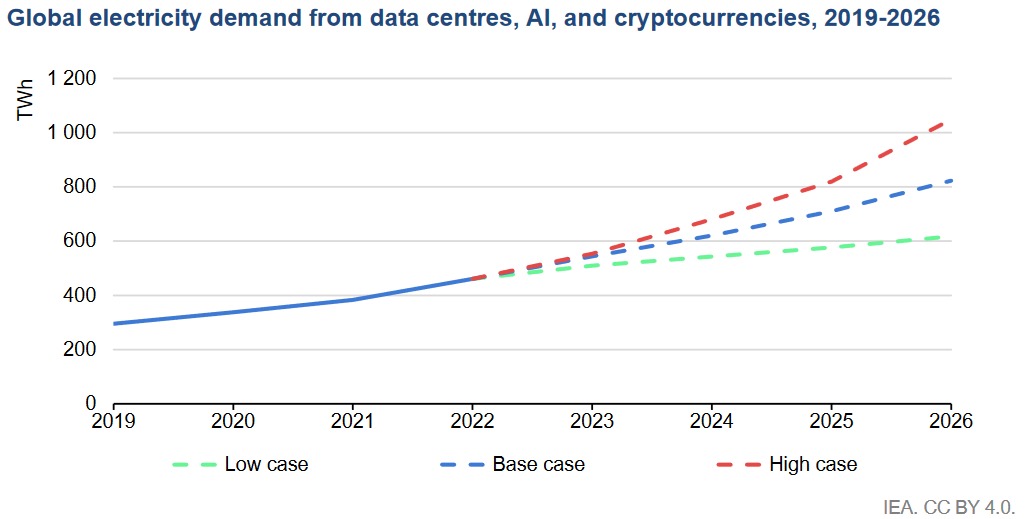
Air and liquid cooling describe how the equipment’s heat is collected and carried away. Evaporation can work at two points: cooling an air stream that conditions the hall, or rejecting heat from a water circuit. A complete system often combines several methods. To compare rack power, cooling systems and network availability requirements, use the data center infrastructure dependency map.
Server electricity ends up as heat the facility has to manage. That takes three steps:
- Heat pickup: Server airflow, cold plates, rear-door heat exchangers or immersion systems collect heat from the equipment.
- Heat transport: Fans, water or coolant loops, pumps, coolant distribution units (CDUs) and heat exchangers move it away.
- Heat rejection: Outdoor condensers, dry coolers and cooling towers release heat to the environment. A chiller passes heat to its condenser or rejection circuit, and evaporative air-handling equipment discharges it through an external working airstream.
Direct evaporative air cooling evaporates water into the air being cooled. Indirect evaporative air handling cools a separate working air stream and moves heat across a heat exchanger, so no moisture reaches the data-hall supply air. An evaporative cooling tower works at a different point: it rejects heat from the plant’s water circuit.
Take a direct-to-chip server. Cold plates move processor heat into a technology cooling loop, and a CDU connects that loop to a facility-side circuit. From there, an air-cooled chiller or a water-cooled plant with an evaporative tower rejects the heat. Other server components keep warming the room air.
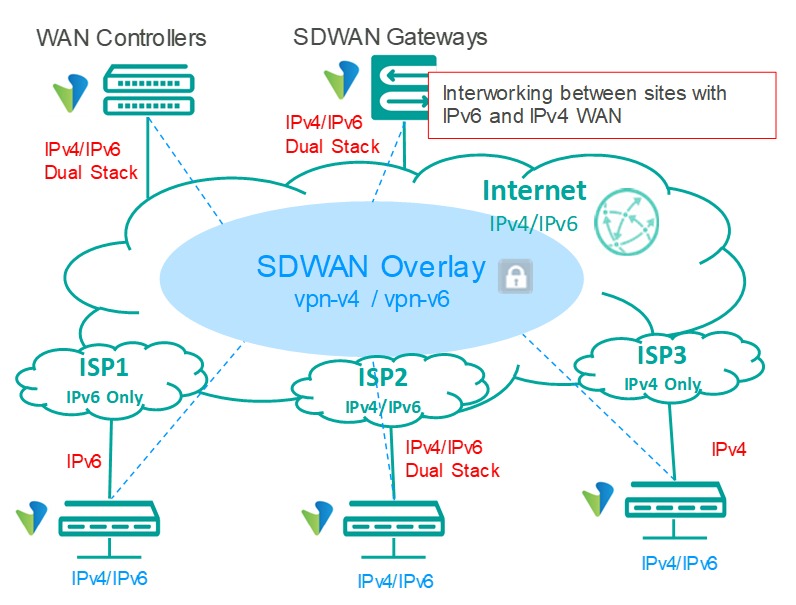
The ITU-T L.1327 cooling-selection guideline, published in August 2024, evaluates cooling technologies in multiple data center scenarios. Its split into indoor exchange, distribution and outdoor dissipation names the functions a complete plant must provide.
Each handoff between these stages is where temperature compatibility and capacity have to be settled.
How Do Air, Evaporative, Liquid and Hybrid Configurations Work?
Complete architectures pair an equipment-side method with a way to distribute and reject the heat. They differ in their operating interfaces, the ambient conditions they rely on and the infrastructure they need.
Conventional air-cooled servers use internal fans and room airflow. A computer room air conditioner (CRAC) commonly uses direct-expansion refrigeration, while a computer room air handler (CRAH) typically exchanges heat with a chilled-water circuit. How well supply and return air are managed decides how effectively the room system reaches equipment inlets.
Direct-to-chip systems pull heat from selected components with liquid cold plates. Their pumps, piping and CDU need compatible facility connections. A hybrid installation keeps air cooling for devices outside the liquid circuit.
| Complete configuration | IT-side pickup | Transport and rejection | Main condition |
|---|---|---|---|
| Server air cooling with DX | Server fans and room air | Air, refrigerant and air-cooled condenser | Suitable airflow and refrigeration capacity |
| Server air cooling with chilled water | Server fans and CRAH units | Room air, chilled water and a dry or evaporative plant | Supported chilled-water and air conditions |
| Indirect evaporative air handling | Server fans and room air | Heat exchanger to a separately evaporatively cooled working airstream | Outdoor conditions, air-path isolation and capacity |
| Direct-to-chip with dry rejection | Cold plates plus residual air cooling | Technology loop, CDU, facility circuit and dry cooler or suitable chiller | Compatible coolant temperatures and ambient performance |
| Direct-to-chip with evaporative rejection | Cold plates plus residual air cooling | Technology loop, CDU and water-cooled plant with tower | Available water, water treatment and plant interfaces |
| Mixed air/liquid hybrid | Fans and selected liquid-cooled components | Parallel heat paths served by a suitable combined plant | Capacity and resilience of both paths |
The first three rows suit a hall that keeps conventional server airflow. The last three add liquid equipment interfaces.
Rear-door heat exchangers and immersion add more equipment-side options. Some immersion designs capture a larger share of rack heat; room and auxiliary loads still depend on the installation.
A post in r/datacenter pushed back against blanket dismissal of established evaporative and free-cooling approaches:
Sort of just a rant. How is it that I see soooo many people in a sub dedicated to data centers that completely dismiss evaporative and free cooling like they aren’t one of the most (if not the most) prominent methods of cooling in the industry? Edit: I am purely referencing people who don’t believe (or try to argue) that data centers can’t or haven’t been able to be cooled by exclusively evaporative or free cooling. I am not talking about mechanical cooling being needed to cool high density sites.
The author’s split between conventional and high-density sites comes down to equipment load.
Which Cooling Approach Fits the Rack Load and Server Equipment?
Equipment power, heat concentration and the air or coolant conditions the manufacturer supports decide the first feasible set of configurations.
Build the equipment envelope from four inputs:
- Present and forecast loads: Installed and expected IT power, peak conditions, variation among racks and localized hotspots.
- Heat distribution: Components on manufacturer-approved liquid cooling, plus the remaining heat released into room air.
- Hardware compatibility: Supported air conditions, liquid connections, temperature classes and equipment restrictions.
- Existing facility interfaces: CDU connections, water supply and return conditions, air-handling capability and supporting loads.
A room can have enough total cooling capacity and still get hot equipment inlets because the airflow is poorly distributed. A new direct-to-chip cluster also leaves an air-side load when networking, storage, power components or older servers still depend on room cooling.
ASHRAE-related guidance names liquid-cooling temperature classes W17, W27, W32, W40, W45 and W+. The supported server, CDU and facility specifications decide which temperatures and interfaces apply to a given system.
How Do Wet-Bulb Temperature, Climate and Water Availability Change the Choice?
Local weather sets the temperatures available for outdoor heat rejection. Water quantity, quality and operating restrictions constrain wet systems. Annual averages hide the conditions that decide peak capacity.
Dry-bulb temperature is the ambient air temperature. Wet-bulb temperature reflects evaporative potential and varies with moisture in the air. Evaporative rejection follows wet-bulb conditions; dry rejection follows dry-bulb conditions.
A newcomer to the data center field framed the uncertainty around hot-weather growth in Texas:
I’m specifically talking about Texas (anyone here at stargate?). As power demand increases, are we seeing less evaporative cooling systems because they can’t keep up? I imagine with the Texas heat the problem is only more severe. I’m just looking at entering the field and am trying to learn more about how new construction is evolving.
At a hot site, compare the outdoor temperature with the temperature your plant has to deliver, whether that is leaving fluid or supply air. A design may use economizer operation in favorable periods and mechanical refrigeration when conditions require it. Evaluate that mix for the actual plant.
A water-constrained site keeps dry rejection in contention while you test energy demand and capacity in severe weather. A site with suitable water can consider evaporative or hybrid rejection, along with the treatment and maintenance that come with it.
Screen the climate with hourly dry-bulb and wet-bulb data, relevant extremes, required cooling temperatures and the site’s water quantity and quality. A choice that can’t deliver the required conditions in the worst case is ruled out or redesigned.
Which Is More Energy- or Water-Efficient, and What Do PUE and WUE Show?
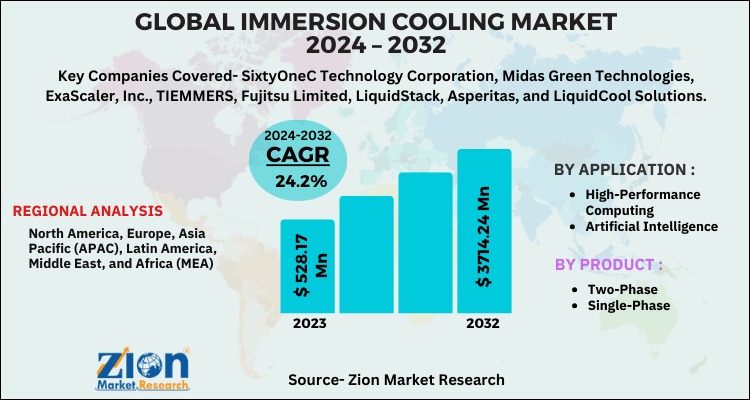
Cooling efficiency is a facility-level comparison. The same technology gives different results when weather, equipment load, heat rejection and measurement boundaries change.
Power Usage Effectiveness (PUE) divides total facility energy by IT equipment energy over a matching period. Standard site Water Usage Effectiveness (WUE) divides annual site water use in liters by annual IT equipment energy in kilowatt-hours. WUEsource is a separate measure that adds the upstream water tied to energy generation. Before you compare PUE or WUE figures from two facilities, check what each one measured, using the data center energy-efficiency measurement guide.
| Measure or cost category | Inputs | Decision value | Comparable basis |
|---|---|---|---|
| PUE | Facility energy and IT energy | Facility energy overhead relative to IT | Matched accounting period and facility boundary |
| Site WUE (L/kWh) | Annual site water use and annual IT energy | Direct site water intensity | Same onsite water definition and period |
| WUEsource | Site water and water associated with supplied energy | Broader source-water intensity | Consistent upstream accounting assumptions |
| Cooling plant energy | Fan, pump, compressor and control energy | Plant operating burden | Comparable load and weather conditions |
| Lifecycle cost | Capital, power, water, treatment, service and replacement inputs | Economic trade-off | Same study horizon and reliability requirements |
A low site WUE can coexist with different upstream electricity-related water impacts, so the boundary matters when one candidate uses more electricity and another consumes water onsite.
An Uptime Institute analysis published in April 2026 reports that some evaluated dry or adiabatic systems can rival evaporative cooling in energy performance.
A 2026 thermal-management review of 83 data center entries found 23 reported above 0.4 L/kWh WUE.
Does Closed-Loop Liquid Cooling Eliminate Water Use and Refilling?
A closed technology cooling loop recirculates fluid within its own circuit. Water use elsewhere in the facility depends on how the heat reaches the outdoors, and servicing can still call for makeup or replacement fluid.
One resident described a claim made during a local discussion:
There’s a potential data center going in within my location, and I talked to our local councilman about it. He says that the data center is going to be using an “air to air closed loop cooling system” that only needs to be filled with water every 10 years or so. Is this a real thing? Surely there’s some sort of trade off, like in energy usage? I’m here for information and to understand, not to argue.
The councilman’s 10-year refill claim has no plant specification behind it. “Closed” also doesn’t say what is closed: the server loop, the facility circuit or the whole heat-rejection system.
One closed rack loop may pass its heat to a dry cooler through facility exchangers. Another may feed a water-cooled chiller served by an evaporative tower, where water evaporates at the tower while the rack circuit keeps recirculating its own fluid.
The Open Compute Project’s March 2026 Water–Heat–Energy material treats heat transfer and its water and energy consequences across the wider system. Its water inventory separates initial loop fluid, makeup or replacement, cooling-tower evaporation, treatment and other facility use.
Draw a water-path diagram that assigns the fluid inventory and each water-use stream to its part of the facility.
What Can Go Wrong with Cooling Reliability, Humidity and Water Systems?
An efficient design also needs stable environmental control, maintainable equipment and a planned response to failures.
Humidity can rise because of building air paths, pressure relationships or control behavior. Condensate or humidification water can pool where drainage is restricted or equipment doesn’t operate as intended. Temperature, moisture, pressure and equipment trends together show which cause you have.
Liquid cooling adds pumps, fittings, heat exchangers, monitoring and isolation points. A pump failure or the loss of a heat-rejection path changes the redundancy and recovery design you need. Access matters too: an efficient arrangement that technicians can’t reach during operation is hard to maintain. Before changing coolant distribution units, liquid loops or heat exchangers, review the closed-loop liquid cooling feasibility guide for the implications.
Cooling towers raise a separate public-health concern. The CDC’s cooling-tower water-management guidance covers Legionella and the control of scale, sediment and corrosion. Open and closed-circuit evaporative towers both need a water-management program.
A failure-mode review covers:
- Room conditions: Temperature, humidity and pressure trends, plus alarms for abnormal operation.
- Water management: Tower controls, water quality, drainage, makeup and unintended leaks.
- Mechanical continuity: Fan and pump dependencies, isolation, backup capability and recovery paths.
- Maintainability: Access to components and procedures that work during ongoing facility operation.
Leave chemical dosing, pressurized loop servicing and electrical repairs to qualified staff working from your site procedures.
What Should You Check Before Retrofitting a Data Center Cooling System?

A retrofit starts with the measured reason the existing room struggles: uneven airflow, unsuitable controls, actual plant capacity or a mismatch with newly installed servers. Check containment, supply and return paths, temperature settings and economizer opportunities against the conditions your equipment supports. Added liquid cooling also needs space, piping, utilities, service access and enough room-air capability for legacy equipment. If measured cooling or redundancy capacity falls short, operating adjustments won’t fix it. The plant needs expansion or redesign.
How Do You Shortlist a Data Center Cooling Configuration for Your Site?

The shortlist records the complete heat paths that passed the earlier technical checks. Give each candidate one status: compatible for engineering study, conditional on one open input, or ruled out by a documented constraint.
| Selection gate | Evidence required | Still open if | Drop or redesign if |
|---|---|---|---|
| Equipment compatibility | Supported server air/liquid interfaces and temperatures | Vendor limits or CDU interface undocumented | Required cooling method or temperature unsupported |
| Load and distribution | Present and forecast peak heat, residual air load | Future load or distribution capacity unresolved | Pickup or distribution can’t carry the required heat |
| Outdoor weather | Hourly dry/wet-bulb conditions and plant temperature requirements | Extreme-weather capability unestablished | Required rejection conditions can’t be delivered |
| Water resources | Availability, quality and applicable restrictions | Supply or treatment suitability unknown | Essential water use unacceptable or unavailable |
| Reliability | Failure response, redundancy, alarms and maintainability | Recovery arrangements not yet evaluated | Critical operating requirement can’t be met |
| Energy and economics | Matched PUE/WUE basis and lifecycle inputs | Comparable cost or performance inputs missing | A site-defined requirement or constraint isn’t met |
| Retrofit feasibility | Existing piping, air capacity, space and operating continuity | Site interfaces not yet surveyed | Configuration can’t fit the physical or service constraints |
Say you’re retrofitting a mixed-density hall. The new processors connect to manufacturer-supported direct-to-chip loops, so they pass the compatibility gate, and the older servers stay on air. The outdoor rejection path stays conditional until someone shows it holds capacity in extreme weather. If a server needs coolant outside its supported temperature range, you drop that pairing. A compatible path with enough capacity goes to detailed engineering study.

For each surviving candidate, the decision record names its topology, outstanding evidence, technical owner and validation method.
If your equipment temperatures, weather, water resources or resilience requirements rule out a combination, pick a different complete heat path and send the survivors to engineering validation on your site.